
In the food industry, maintaining the right balance between product availability, freshness and cost control is a constant challenge. Inaccurate planning can lead to two costly situations: overproduction, which ties up cash and generates waste, and stock shortages, which put pressure on customer relationships.
The good news is that better visibility on demand, inventory, production and logistics already helps significantly reduce these risks. And when an ERP like Odoo supports these processes in an integrated way, planning becomes smoother, more reliable… and above all more reassuring for both teams and the organization.
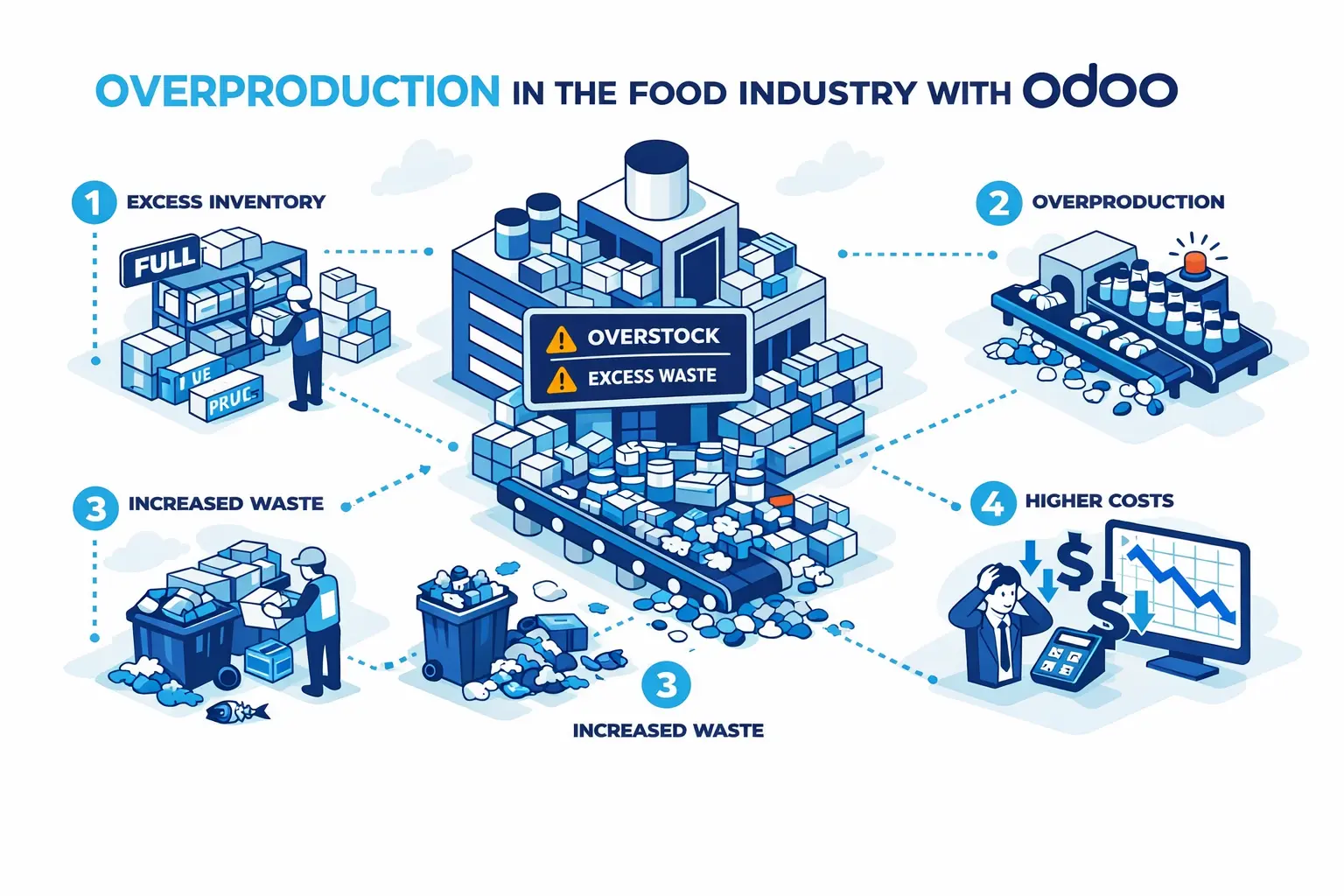
Why overproduction and stock shortages are so costly in the food industry
In the food industry, margins are often tight and operational constraints are strong. When planning lacks precision, companies swing between two extremes, both with a direct impact on performance.
On one side, overproduction ties up cash in inventories that quickly lose value, especially when expiration dates are involved. It increases storage costs, raises the risk of waste, and can ultimately affect the overall profitability of a product range. In some cases, teams even have to “push” products through unplanned discounts… at the expense of margins.
On the other side, stock shortages weaken commercial relationships. A professional customer who cannot be delivered on time, an empty shelf for a flagship product, or a canceled e-commerce order immediately creates frustration and, over time, a loss of trust. In a sector where competition is intense and loyalty can be fragile, this can weigh heavily.
Between these two risks, operational teams often work under constant pressure: last-minute trade-offs, manual adjustments, urgent coordination between production, logistics and sales… with the feeling of constantly “chasing information.”
Reducing overproduction and stock shortages is therefore not just an internal organization issue.
👉 It is a direct lever on profitability, service quality and team peace of mind.
Why overproduction and stock shortages are so costly in the food industry
On paper, planning seems simple: you would “just” need to align production with demand. In reality, food companies operate in an environment where many factors make this balance much more complex.
Demand variability and seasonality
Demand can change very quickly, sometimes without any warning signs: festive periods, weather conditions, consumption trends, promotions, new recipe launches… Even when historical data exists, it does not always reflect the market’s real dynamics. As a result, companies sometimes produce too much “just in case,” or too little out of caution — with all the consequences we know.
Multiple sales channels (retail, B2B, e-commerce)
Many food companies now sell through multiple channels: stores, horeca, wholesalers, recurring B2B, e-commerce, subscriptions… These channels do not have the same volumes, constraints or rhythms. When they are not synchronized within a single system, the real inventory picture becomes blurred, and planning turns into a constant guessing exercise.
Traceability constraints, lots and expiration dates
Unlike other sectors, managing expiration dates, lots and traceability is central. Companies do not manage just a total volume, but available volumes by lot, by date, by channel. Without good visibility on these parameters, it is very easy to produce “too early” or “in the wrong place,” leading to unnecessary losses.
Fragmented data and tools
Finally, the most common cause is often tool fragmentation. Some information sits in the ERP, some in Excel files, some in emails, and some only in the heads of key people. As long as everything runs smoothly, this can work more or less. But in times of tension, it becomes very difficult to make fast and reliable decisions based on truly consolidated data.
👉 So this is not just a matter of willpower or discipline.
Teams often do their best with the tools and visibility they have.
This is precisely where structured planning and a well-used ERP can make all the difference.
From reaction to prediction: structuring planning
Faced with these constraints, many food companies still operate in reaction mode: volumes are adjusted on the fly, a batch is relaunched because a customer increased their order, production is slightly increased “to avoid stockouts”… until inventories grow or expiration dates approach too quickly.
Moving toward calmer planning does not mean predicting the future perfectly. Above all, it means structuring data and processes to reduce uncertainty, and making decisions based on consolidated reality rather than approximations.
Relying on reliable sales data
The first building block is having a clear view of demand: sales history, seasonality, customer recurrence, subscriptions, B2B orders… When this information is centralized, it becomes possible to identify trends, anticipate peaks and better adjust production volumes.
Having a clear view of stocks and lots
Planning only makes sense if inventory visibility is reliable: available lots, expiration dates, reservations for specific customers, potential returns…
A centralized view avoids launching unnecessary production while a batch is still available elsewhere in the chain.
Aligning production with real demand
In an MRP-driven approach, production is no longer simply “pushed” to the market. It is driven by consolidated demand, while taking constraints into account:
- machine capacities
- raw material availability
- setup times
- customer priorities
This helps smooth workloads, avoid overstocking and secure product availability.
Using realistic forecasts and scenarios
The goal is not perfect accuracy, but having reliable ranges and scenarios: growth, seasonality, new channels…
When these forecasts are connected to operational tools, they become real decision-making supports rather than theoretical spreadsheets.
👉 In other words, planning becomes a structuring business lever, not a stressful exercise under pressure.
This is exactly where an ERP like Odoo delivers its full value.
How Odoo concretely helps reduce overproduction and secure inventories
When processes are clear and teams are aligned, an ERP like Odoo becomes a true operational backbone. The goal is not to add another tool layer, but to centralize information and simplify decision-making. In this context, several features play a key role in reducing overproduction and securing inventory.
Integrated planning and MRP
With its production and planning (MRP) modules, Odoo directly connects orders, forecasts and manufacturing orders.
Material requirements are calculated automatically, production capacities are taken into account, and teams have a clear view of what needs to be produced, when and why.
The result: fewer approximations, fewer unnecessary “safety buffers,” and production that is better aligned with real demand.
Lot, expiration date and FEFO management
In the food industry, every lot matters.
Odoo tracks lots and expiration dates throughout the entire chain and applies a FEFO (First Expired, First Out) logic. Products closest to their expiration date are prioritized, reducing waste and improving stock rotation.
Teams gain an immediate and reliable view of what is truly available.
Sales synchronization across POS, e-commerce and B2B
When sales are spread across different channels, synchronization becomes essential.
With Odoo, POS, e-commerce and B2B orders are consolidated in a single system. Inventory updates automatically, avoiding unintentional stockouts, double sales or production decisions based on partial information.
Cost, margin and operational performance tracking
Odoo also provides essential financial visibility to support planning: raw material costs, margins per product, scrap, machine performance, delivery lead times…
This transparency enables fact-based decisions, allowing companies to balance production volumes, stock levels and profitability objectives intelligently.
Ultimately, Odoo is not just an administrative ERP.
👉 It becomes the operational backbone connecting demand, production, logistics and finance — supporting a more predictable and higher-performing organization.
What changes on the ground
When planning is structured and the ERP truly supports operations, the impact is felt very quickly in daily work. Decisions are no longer based on estimates or parallel files, but on centralized, shared and reliable data.
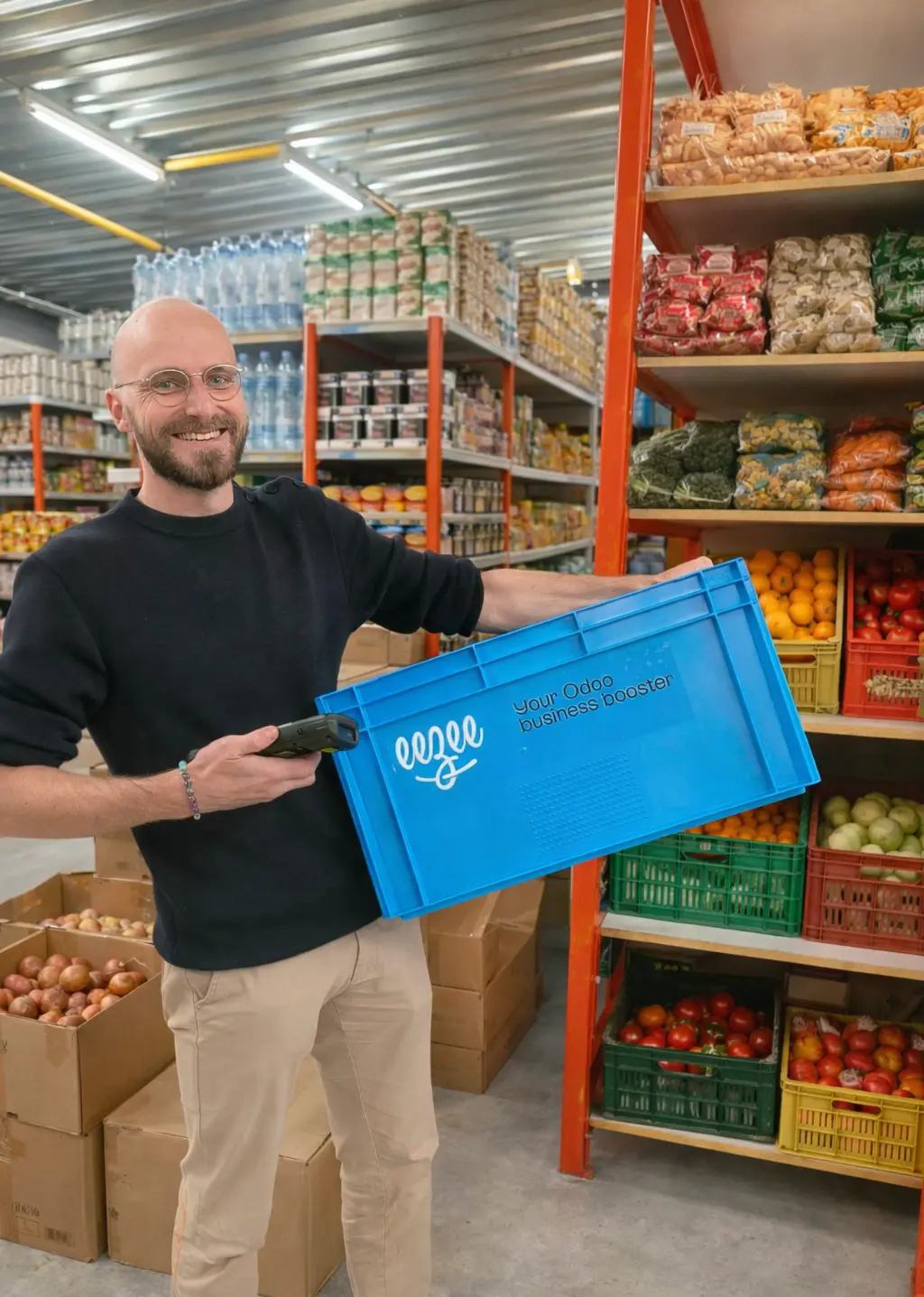
For some roasters or beverage manufacturers, for example, synchronization between production, stores, e-commerce and B2B customers allows them to anticipate needs and produce just the right volumes. Stock remains available where it is needed, without generating unnecessary quantities.
In more complex industrial environments, such as multi-SKU food manufacturing or airline catering, the combination of MRP, traceability and planned maintenance not only reduces overproduction, but also secures product availability and quality. Teams gain visibility, audits become easier, and decisions are better informed.
Whether it is a small craft business, a fast-growing scale-up or an industrial group, the common denominator is the same:
👉 better structure, less operational stress and stronger overall performance.
Measurable benefits for the business
When planning, production and inventory management are aligned within a single system, the benefits are not just theoretical.
They quickly translate into concrete results:
- less waste and fewer losses linked to expiration dates, thanks to better stock rotation
- healthier cash flow, with less capital tied up in overstock
- better product availability and more reliable customer relationships
- reduced mental load for teams, who work with consistent data
-
clearer financial visibility, enabling better margin and cost control
- a more resilient organization, less dependent on Excel or a few key individuals
Beyond the numbers, operational peace of mind often stands out: fewer emergencies, fewer last-minute trade-offs, and an organization that can focus on innovation and service rather than firefighting.
Use cases: Our experience in the field with food industry players
Several brands in the sector have already structured their multichannel operations thanks to a modern ERP.
Here is how they use Odoo to connect production, e-commerce, POS, B2B, and logistics, while preserving their artisanal identity.
Corica (Belgium)
A Brussels-based roaster combining retail stores, coffee-to-go, B2B and subscriptions. Odoo unifies production, points of sale and inventory, enabling finer planning and better product availability.
Contemporary Foods (Saudi Arabia)
A fast-growing healthy snack manufacturer. With Odoo, the company precisely tracks lots and expiration dates, plans raw materials, and coordinates e-commerce and B2B sales within a single integrated system..
Atlas Servair (Morocco)
A major airline catering player. Centralizing operations in Odoo enables more accurate planning, end-to-end traceability and smooth coordination between production, logistics and finance.
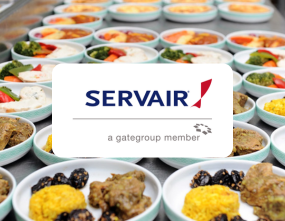
👉 These projects share one common point: when processes are clear and the ERP truly supports operations, planning becomes more reliable and inventory management more controlled.
Our approach: structure, simplify, support
At Eezee, we believe technology only creates value when it serves clear, field-adapted processes. Our role is not just to implement Odoo, but to support food companies in a broader reflection:
- understanding business realities and operational constraints
- clarifying existing flows and priority challenges
- building simple processes shared by everyone
- implementing Odoo as an operational backbone
- training and supporting teams over the long term
This pragmatic and human approach helps create a system that truly works day to day: not an overcomplicated setup, but an environment where everyone knows where to find information and how to contribute to collective performance.
Conclusion
Reducing overproduction and avoiding stock shortages in the food industry is never the result of a single tool. It is first and foremost about organization, visibility and alignment between teams. When planning, production, logistics and sales finally work within the same environment, decisions become simpler, faster… and more reliable.
An ERP like Odoo then plays a central role: connecting data, structuring processes and supporting growth whether for artisans, scale-ups or industrial players. Our field experience shows that this transformation is not only technological. It also changes the way companies collaborate, manage and evolve on a daily basis.
And that is exactly the kind of support we enjoy building with our clients: pragmatic, human and results-driven with Odoo serving their performance.

This article is part of our Odoo ERP expertise for the food industry.
Discover how we support food businesses on our Solutions page.
Discover our Food & Beverage Solution
Better planning and reduced overproduction in the food industry with Odoo